The Monday Morning Shock
For CEO Kwon of Company U, a leading supplier of school restroom partitions, business was steady on the “Welfare Mall”—a closed e-commerce platform specifically for government employees and teachers. That was until he opened an email with the subject line: <Request for Clarification on Patent & Design Infringement>.
A competitor, Company B, had filed a complaint with the platform, alleging that Company U’s products infringed upon their patent and design rights. They demanded an immediate suspension of sales.
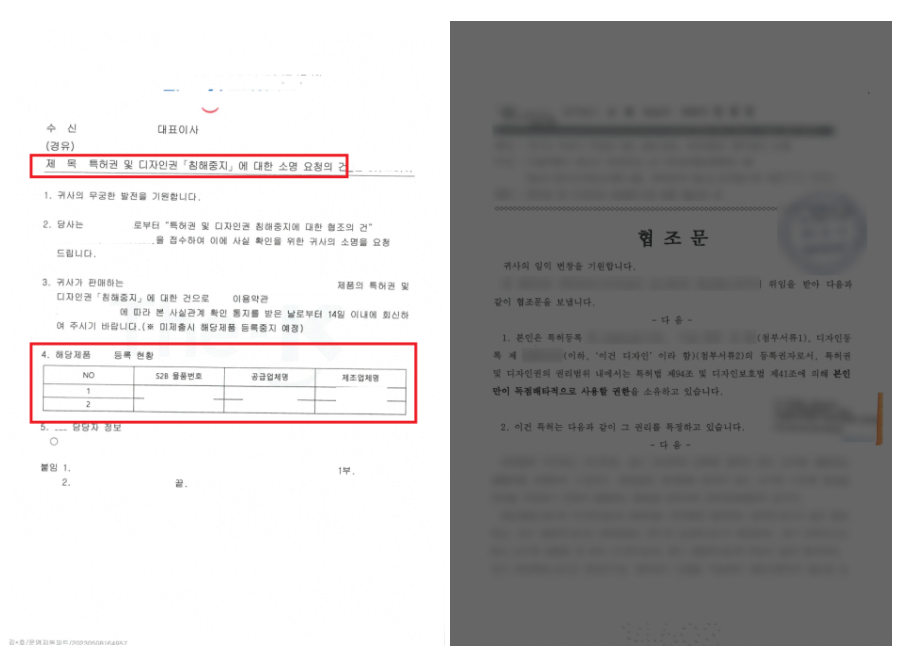
In the fast-paced world of Korean e-commerce (including closed malls), a sales suspension is a death sentence. Platforms often default to suspending the accused product first to avoid liability. CEO Kwon faced imminent financial loss.
The Strategy: A Two-Pronged Legal Defense
CEO Kwon immediately contacted Sarang IP. We knew that a simple emotional denial—”We didn’t copy them”—would not work. E-commerce legal teams require concrete legal evidence to reject a takedown request.
We drafted a comprehensive Non-Infringement Opinion Letter focusing on two distinct legal arguments:
1. Design Rights: Proving “Different Aesthetic Impressions”
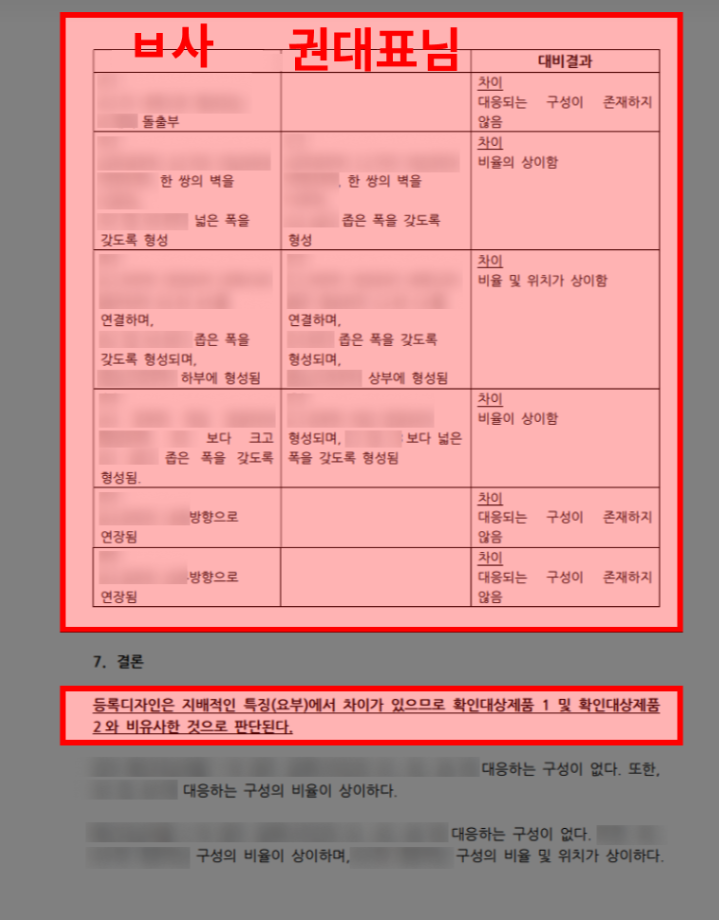
Company B claimed the products looked the same. We countered by analyzing the Design Protection Act.
- While the usage of the partitions was identical, the appearance was not.
- We provided a detailed visual comparison showing that the proportions and specific locations of the locking mechanisms (protrusions) were distinctly different.
- Conclusion: The two designs created a “different aesthetic impression” in the eyes of the consumer, meaning no design infringement occurred.
2. Patent Rights: The “All Elements Rule”
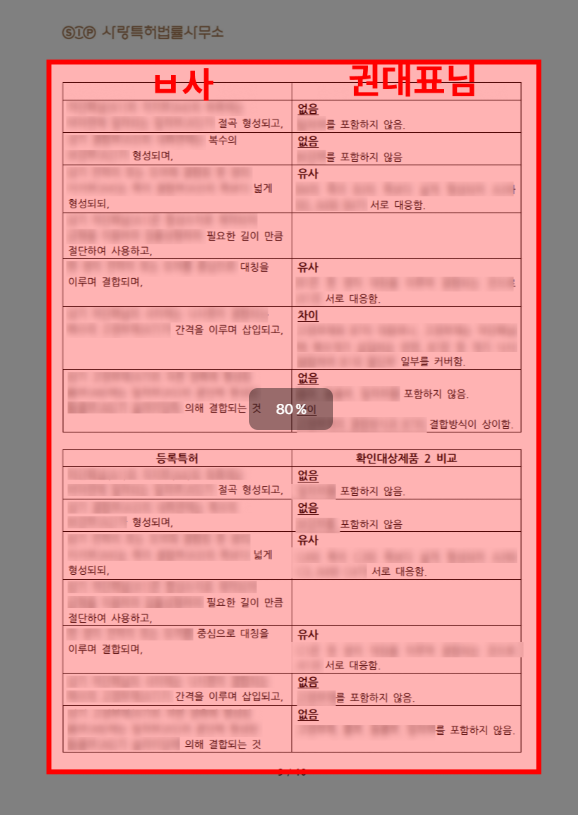
Company B also claimed patent infringement. Here, we applied the strict “All Elements Rule” (or Rule of Completeness).
- For patent infringement to be established, the accused product must contain every single element listed in the competitor’s patent claim.
- We broke down Company B’s patent claims into individual components and compared them to Company U’s product.
- Discovery: Company U’s product utilized a fundamentally different structural coupling method for one key component. Because this specific element from the patent was missing/different in our client’s product, infringement could not be established.
The Result: Sales Ban Withdrawn
We submitted this detailed legal opinion to the Welfare Mall’s compliance team. The logic was irrefutable.
The platform acknowledged our legal analysis, agreeing that Company B’s claims lacked merit. The threat of a sales ban was withdrawn, and Company U continued their business without interruption.
Conclusion
In Korean e-commerce, competitors often use IP complaints as a tactic to disrupt rivals. However, a sudden warning letter does not mean the end of your business.
By responding with a professional opinion letter that clearly dissects the technical and legal differences, you can turn a crisis into a confirmation of your product’s legitimacy.