The “T Spa” Nightmare
Franchising is built on a promise: you pay a fee, and you get a proven business model and a recognized brand. But what if the brand doesn’t actually exist legally?
This was the harsh reality for over 10 franchisees of “T Spa.” The headquarters (HQ) had lured them in with promises of support, only to pull the plug after the first year. When the struggling store owners tried to close their businesses, HQ demanded exorbitant “acquisition fees” to let them out of their contracts. It was a predatory cycle that led to a massive class-action criminal complaint.
While the criminal case focused on fraud, Sarang IP identified a critical weakness in the HQ’s armor: Intellectual Property.
The Discovery: Selling a Brand They Didn’t Own
Upon reviewing the franchise agreements, we discovered a shocking fact: T Spa had been collecting franchise fees and royalties without holding a registered trademark.
In Korea, operating a franchise business based on an unregistered trademark puts the franchisor on shaky legal ground. They were effectively renting out a house they didn’t own.
The Strategy: The “Blackstone” Argument
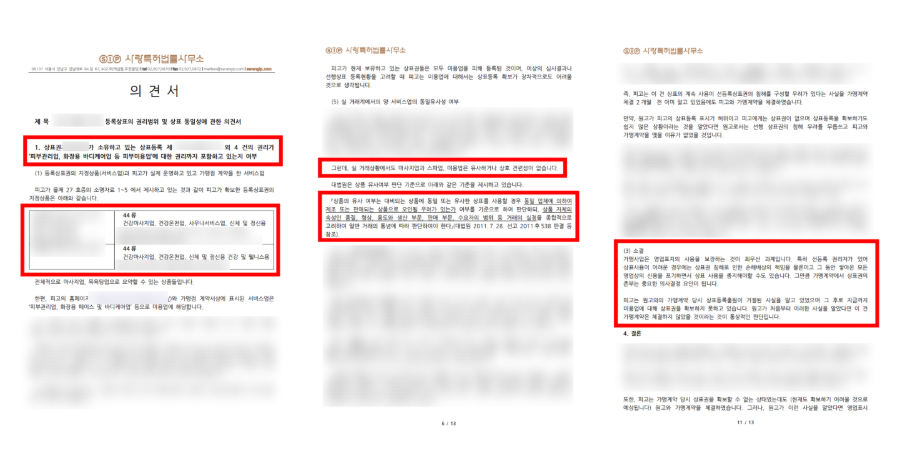
Collaborating with the law firm representing the victims, Sarang IP drafted a specialized Legal Opinion Letter. Our goal was to prove that the fees collected by HQ constituted “Unjust Enrichment.”
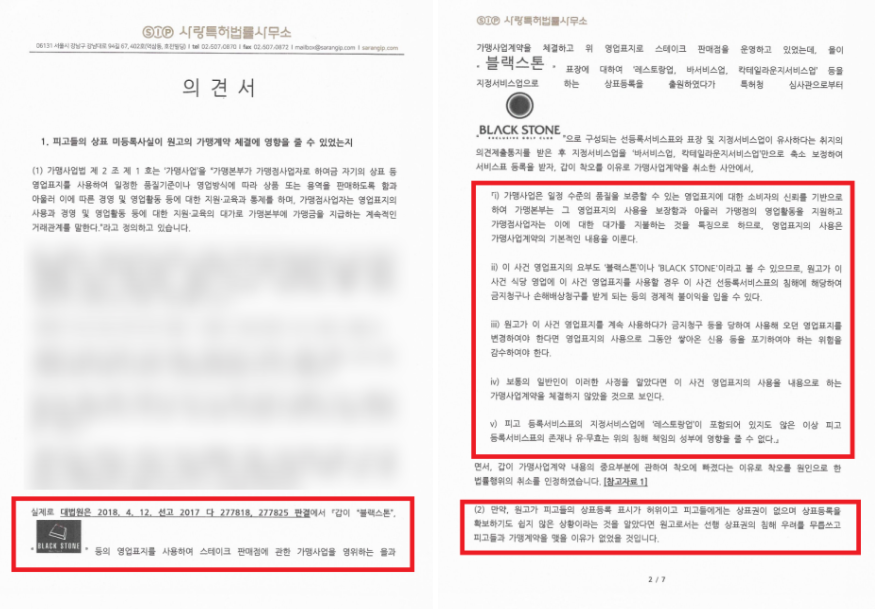
We anchored our argument on the Korean Supreme Court’s famous “Blackstone” Precedent.
- The Logic: The Supreme Court has ruled that a trademark license agreement generally requires the licensor to have a registered right. If there is no registered trademark, and the licensee cannot exclusively use the brand or receive the expected legal protection, the basis for paying royalties collapses.
- Our Argument: We argued that since T Spa had no valid trademark rights, the “license” they sold to the franchisees was defective. Therefore, the money collected for this “license” (franchise fees) was obtained without legal cause and must be returned.
The Verdict: Justice for the Franchisees
The court reviewed the case, giving significant weight to the legal principles outlined in our opinion letter.
The judge ruled in favor of the franchisees. The court recognized the lack of a registered trademark as a key factor in the predatory nature of the business. Consequently, the victims were successful in claiming the return of unjust enrichment, allowing them to recover a portion of their financial losses.
Conclusion
This case serves as a stern warning to franchisors and a lesson for franchisees.
- For Franchisors: You cannot build a legitimate empire on an unregistered brand.
- For Franchisees: Before signing a contract, always verify if the brand is actually registered with the Ministry of Intellectual Property (MOIP; known as the Korean Intellectual Property Office, or KIPO, until October 2025).
At Sarang IP, we don’t just file trademarks; we use trademark law as a sword to fight for fairness in the marketplace.