
The “Inside Job” in Cheongdam-dong
In Cheongdam-dong, the epicenter of South Korea’s luxury fashion and jewelry, Brand C spent years cultivating its reputation. Its flagship product, a signature wedding band series, was the result of painstaking design and craftsmanship.
However, the brand faced the ultimate betrayal: IP theft by a former employee.
A designer who had worked at Brand C resigned and established a rival company, Company V. Shortly after, Company V released a wedding band that looked suspiciously familiar. It was a near-replica of Brand C’s signature design, with only trivial modifications.
Brand C immediately filed a criminal complaint for design infringement. However, Company V did not back down. Instead, they launched a counter-offensive, filing a “Design Invalidation Trial” against Brand C. Their argument? “Brand C’s design lacks originality and is similar to designs already known to the public.”

Luxury wedding band design at the heart of a Korean design invalidation dispute between rival jewelry brands 
Former designer’s copycat brand filing a design invalidation trial against the original wedding band
It was a strategy to destroy the foundation of Brand C’s rights. If Brand C lost this trial, they would lose their signature product and the criminal case simultaneously.
The Strategy: Defense and Counter-Attack
Sarang IP took charge of the case, implementing a simultaneous defensive and offensive strategy.
1. The Defense: Protecting the Original
To invalidate Brand C’s design, Company V submitted internet cafe posts and low-quality photos as “prior art” evidence.
- Our Argument: We meticulously analyzed the evidence and proved its lack of credibility and accurate dating.
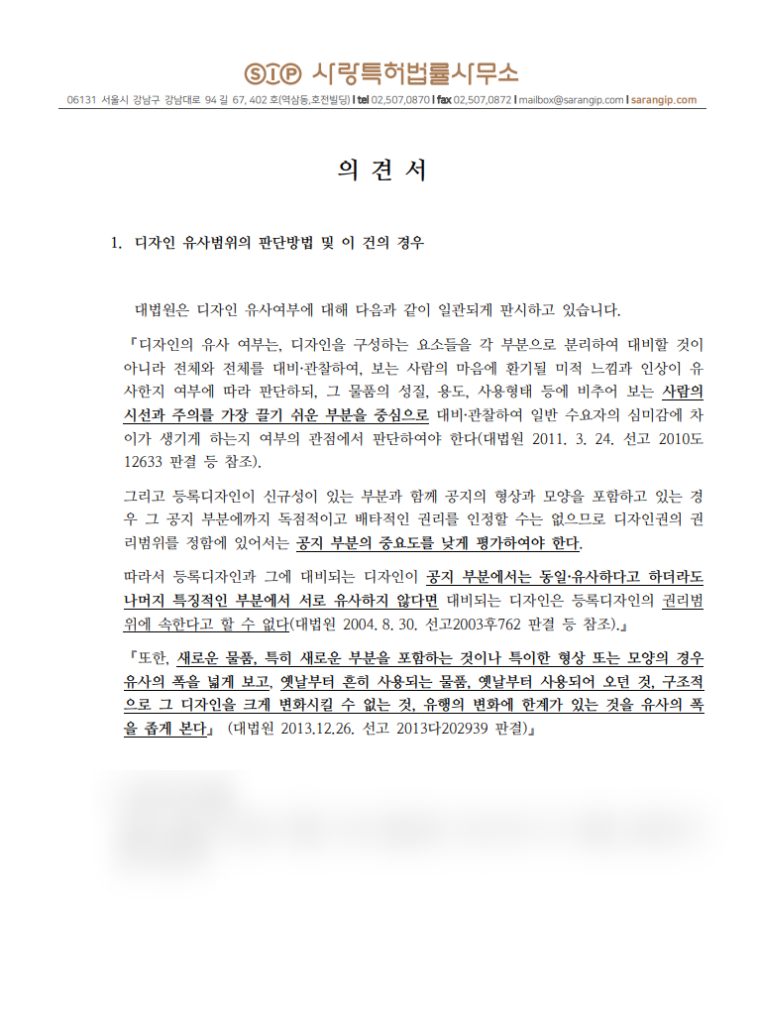
- The Aesthetic Nuance: In jewelry, a millimeter makes a masterpiece. We argued that while the general category (ring) is the same, the specific ratios, curvature, and setting details of Brand C’s design created a unique “aesthetic impression” distinct from any prior art.
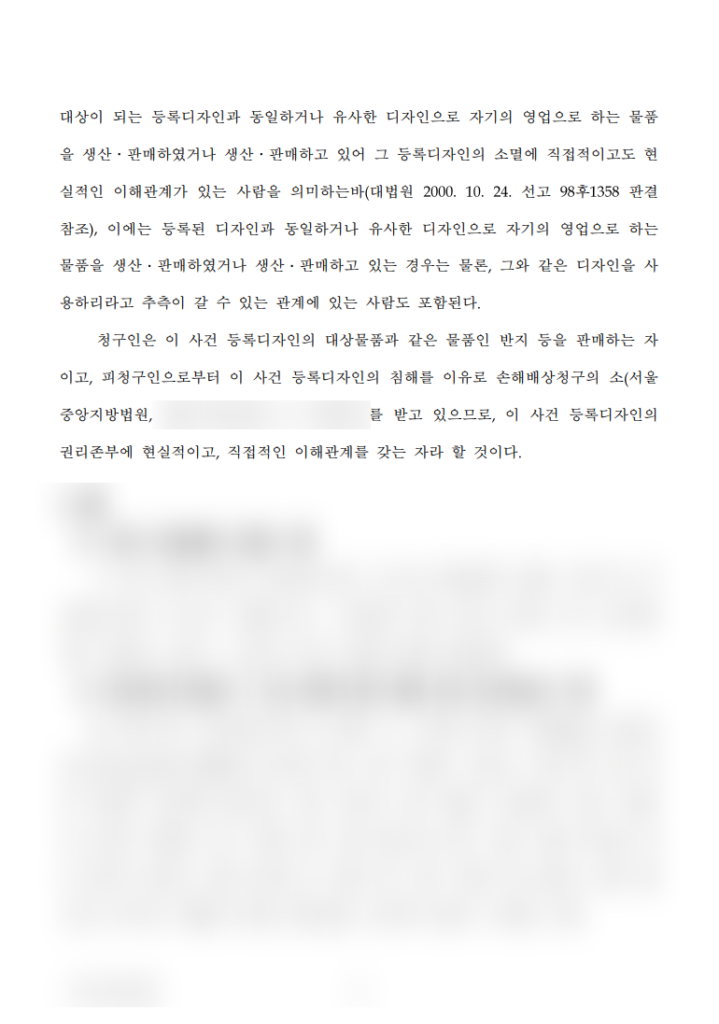
Comparing ring designs to prove Brand C’s unique aesthetic impression against alleged prior art 
Analyzing curvature, ratios, and setting details distinguishing the original design from prior art
2. The Counter-Attack: Invalidating the Copy
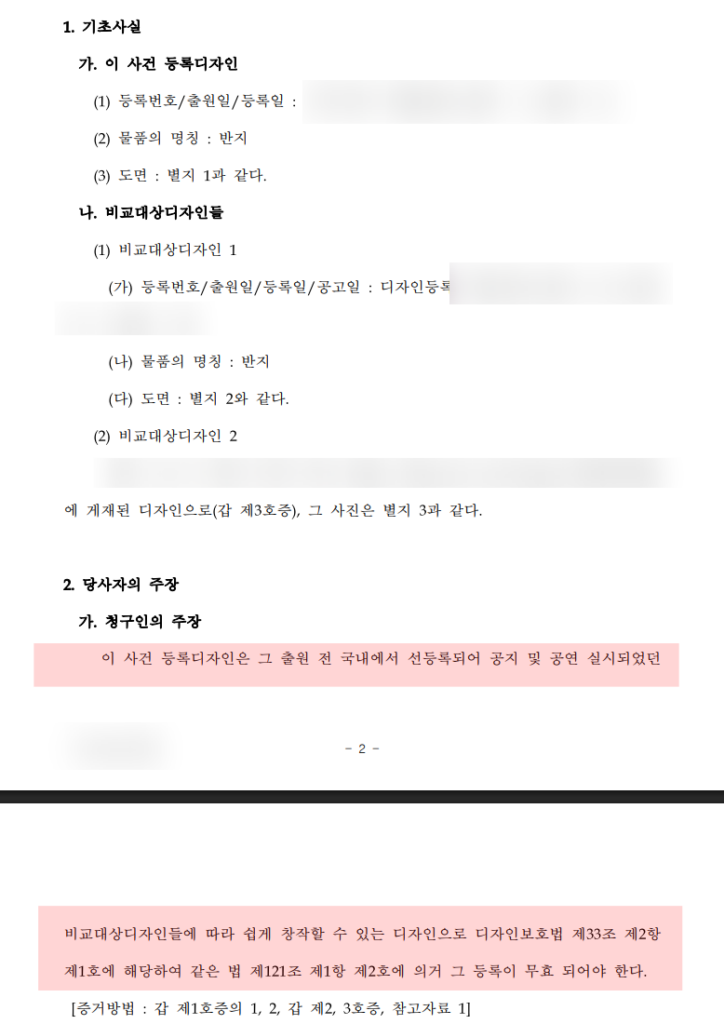
We didn’t just defend; we struck back. We filed a “Design Invalidation Trial” against Company V’s registered design.
- Our Argument: We demonstrated that Company V’s design was merely a modification of Brand C’s pre-existing registered design. Under the Korean Design Protection Act, a design cannot be registered if it is identical or similar to an earlier registered design.
The Verdict: Total Victory
The outcome was a clean sweep for Brand C.
- Defense Won: The tribunal dismissed Company V’s attempt to invalidate Brand C’s design. The signature ring remained protected.
- Offense Won: The tribunal ruled that Company V’s design was indeed a copy of Brand C’s. Consequently, Company V’s design registration was declared “Invalid” (Void).
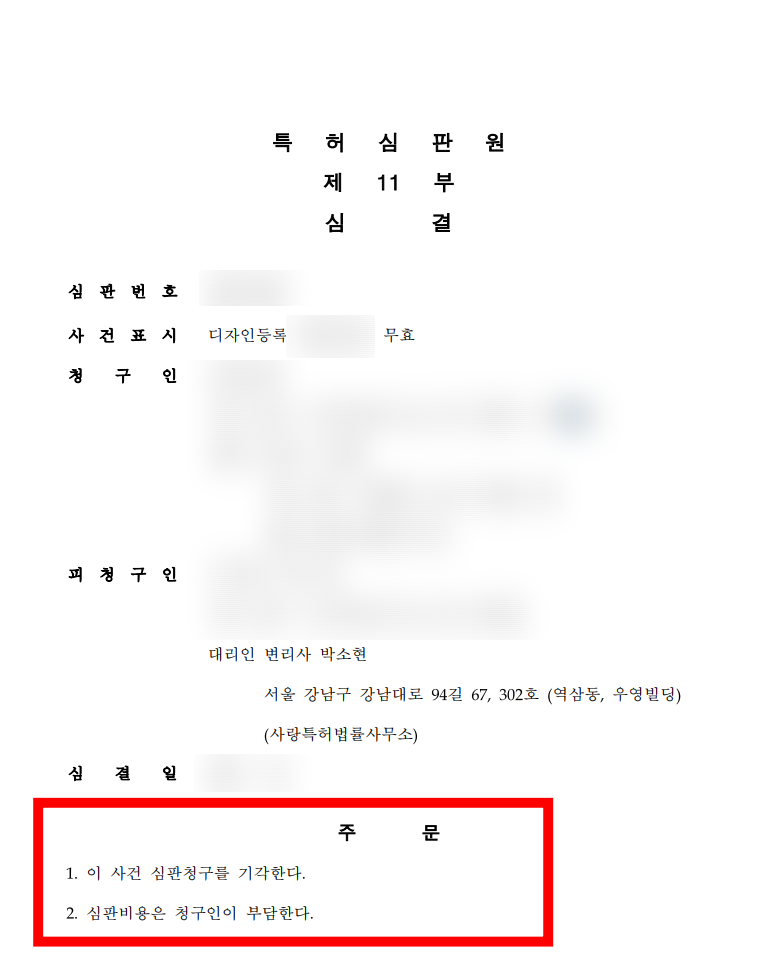
Korean tribunal upholding the original design and rejecting the invalidation attempt 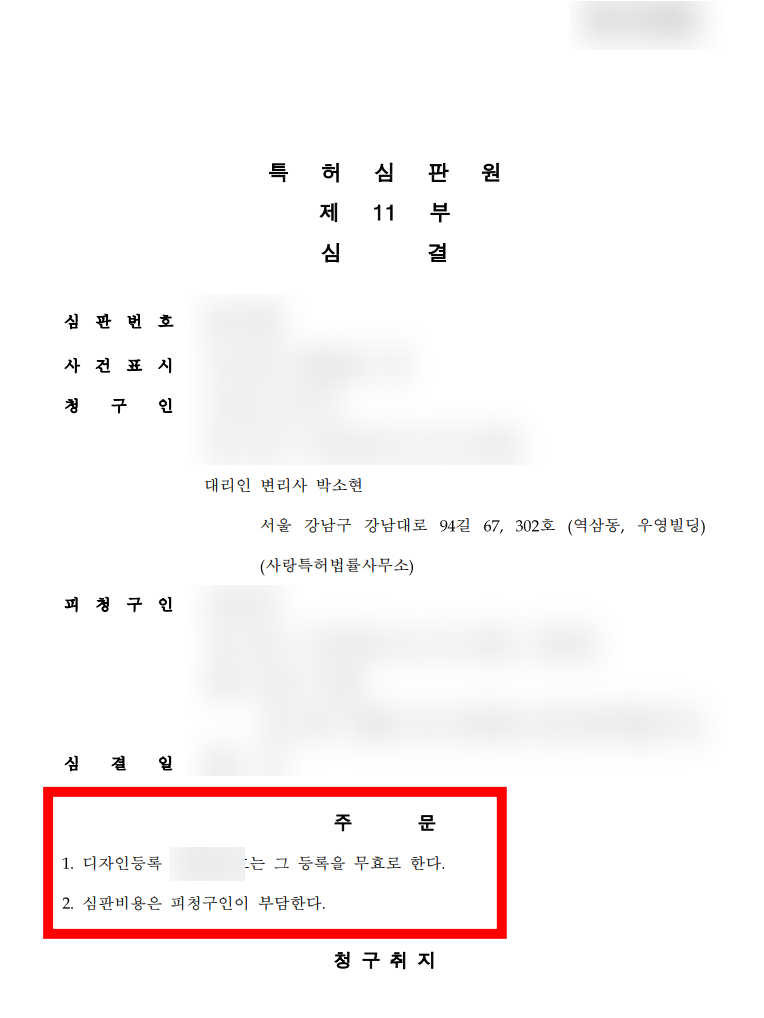
Tribunal declaring the copycat’s registered design invalid for copying Brand C’s signature ring
Impact on the Criminal Case
This administrative victory was the turning point. With the validity of Brand C’s design confirmed and the copycat nature of Company V’s design legally established, the momentum shifted entirely in the criminal proceedings.
Although the process was lengthy, the firm legal ground established by Sarang IP allowed Brand C to successfully hold the former employee accountable in the criminal case, effectively shutting down the infringement.
Design invalidation victory becoming the turning point in the parallel criminal infringement case 
Holding a former employee accountable and shutting down jewelry design infringement in Korea 
Sarang IP securing full protection of a luxury jewelry brand’s signature wedding band design
Conclusion
Design disputes, especially in the luxury sector, are battles over identity. When a former employee leverages inside knowledge to copy a product, the emotional and financial toll is immense.
This case highlights that Design Rights are a powerful weapon—but only if you know how to wield them. By successfully defending the validity of the original and invalidating the copy, Sarang IP ensured that the true creator retained the glory.