The Cost of Innovation
CEO Park was a pioneer. He developed a completely new type of lighting product, “Product A,” and poured hundreds of millions of KRW into marketing to build its reputation. The market responded enthusiastically, and “Product A” became a hit.
However, success in the marketplace often invites parasites. Competitors soon began selling cheap knock-offs, shamelessly using the “Product A” brand name.
To make matters worse, one competitor took the fight to the legal arena. When CEO Park filed for trademark protection, this competitor filed an “Information Submission” (Third-Party Observation) to the Ministry of Intellectual Property (MOIP; known as the Korean Intellectual Property Office, or KIPO, until October 2025), arguing that the name should not be registered.
The Crisis: “It’s Too Common to Trademark”
The strategy worked—initially. The MOIP examiner issued a Notice of Refusal (Office Action).
The examiner’s reasoning was twofold:
- Descriptiveness: The name “A” merely describes the characteristics of the lighting.
- Lack of Distinctiveness: A search on Naver (Korea’s Google) showed countless sellers using the term “A.” Therefore, the examiner concluded, it had become a common, generic term that no single person could own.

If this refusal stood, CEO Park’s massive marketing investment would evaporate. He would lose the legal right to stop the copycats.
The Strategy: Flipping the Narrative
Sarang IP immediately took charge. We knew a standard written response might not be enough given the competitor’s active interference. We decided to combine a Written Opinion with a face-to-face Examiner Interview.
Our argument was a bold pivot. We didn’t deny that the term was widely used on Naver. Instead, we redefined why it was used.
1. “It’s Not Generic, It’s Stolen” We argued that the high volume of search results wasn’t evidence of the term being generic; it was evidence of rampant infringement. We presented proof that CEO Park was the original creator of the coined term. The flood of other sellers appeared after his marketing campaigns. We argued that rewarding copycats by calling the term “generic” would be an injustice to the innovator.

Evidence that the applicant coined the brand name first, with copycat sellers appearing only after his marketing 
Naver search results showing many sellers using the brand name, cited as proof of infringement rather than genericness 
Additional Naver listings of copycat sellers using the coined brand name after the applicant’s marketing campaign
2. Proof of Fighting Back To prove CEO Park treated this as a proprietary brand, not a generic term, we submitted extensive evidence:
- Records of Naver IP infringement takedown requests.
- Complaints filed with the Fair Trade Commission against imitators.
- Invoices showing the massive marketing spend that built the brand’s fame.

Record of a Naver intellectual property infringement takedown request filed against imitating sellers 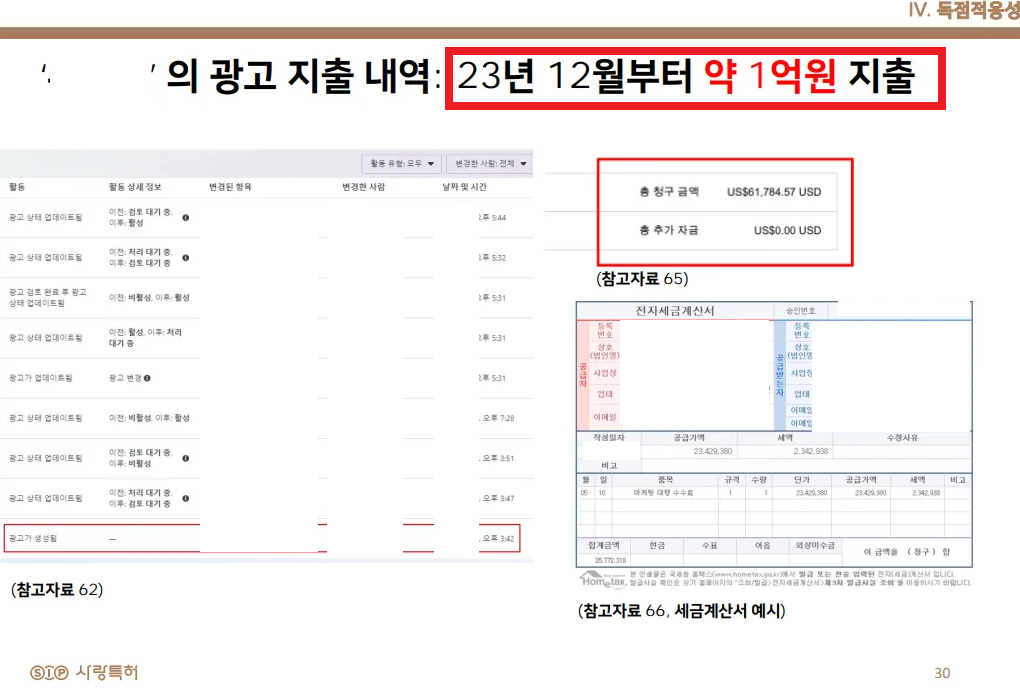
Naver IP infringement complaint submitted as evidence the applicant actively protected the brand 
Complaint filed with the Korea Fair Trade Commission against sellers imitating the brand 
Invoice showing the applicant’s substantial marketing spend that built the brand’s reputation 
Marketing expenditure records demonstrating investment in building the brand’s fame 
Evidence timeline documentation submitted to prove the applicant’s prior use and brand ownership
3. The Examiner Interview In the interview room, we walked the examiner through the timeline. We showed them that “Product A” did not exist as a word before CEO Park created it. We persuaded the examiner that the current “chaos” in the market was exactly why the trademark needed to be granted—to restore order and protect the true owner.

The Verdict: Registration Granted
The examiner accepted our logic. They acknowledged that the widespread use was a result of unauthorized copying, not a lack of inherent distinctiveness.
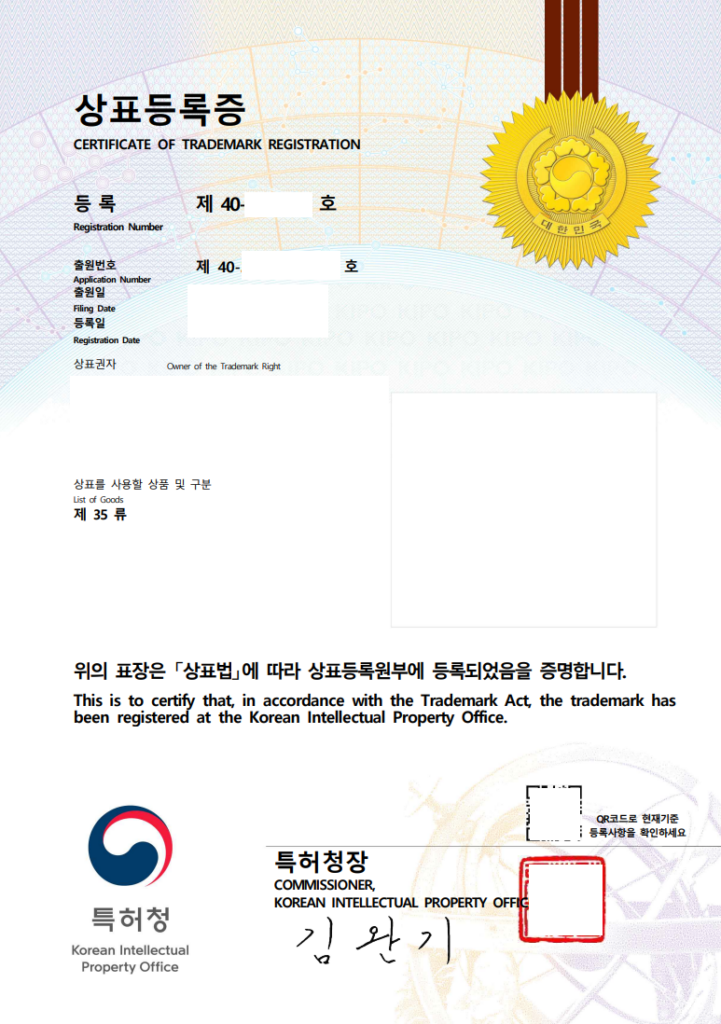
Despite the competitor’s interference and the difficult initial rejection, the refusal was withdrawn. CEO Park received his Final Decision of Registration.
Conclusion
Competitors will often try to use the “Descriptiveness” argument to block your trademark, claiming your brand is just a common word. But as this case shows, widespread use by copycats does not make your brand generic—if you can prove you are the source.
At Sarang IP, we don’t just file papers; we meet with examiners and fight for the story behind your brand.