Can You Patent a Rice Bowl?
CEO Park approached Sarang IP with a vision for a new franchise brand centering on “Cup Bibimbap.”
Unlike traditional Bibimbap served in a bowl, his product featured transparent cups where the ingredients—rice, pumpkin, carrots, eggs, and garnishes—were stacked in a specific, colorful vertical order. The visual appeal of these distinct layers through the clear plastic was the core identity of the brand.
He wanted to protect this visual arrangement with a Design Registration. However, protecting food designs is notoriously difficult.
The Hurdle: “Industrial Applicability”
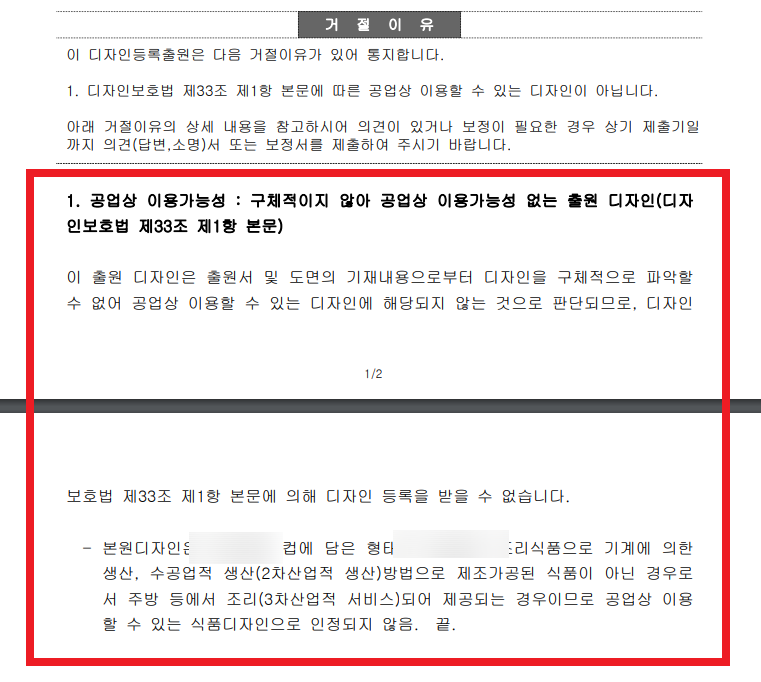
As feared, the Ministry of Intellectual Property (MOIP; known as the Korean Intellectual Property Office, or KIPO, until October 2025) issued a Notice of Rejection.
The examiner cited a lack of “Industrial Applicability.” In design law, a registrable design must be capable of being mass-produced with a consistent, identical shape. The examiner argued that because food ingredients are natural and irregular, and the cooking process varies, it is impossible to produce the “Cup Bibimbap” identically every single time by machine or manual process.
Essentially, MOIP said: “Every scoop of rice looks different, so you can’t own the design.”
The Strategy: Proving Standardization
We knew that accepting this logic would leave CEO Park’s franchise vulnerable to copycats. We drafted a detailed response to challenge the examiner’s narrow interpretation.
Our defense rested on three key pillars:
- The “Assembly Line” Argument: We argued that unlike home cooking, this product was designed for a franchise system. We provided evidence of a standardized manual and manufacturing process where specific amounts of ingredients are leveled and layered in a fixed sequence. This allows for “repetitive production” of the same visual appearance.
- Mass Production Capability: We demonstrated that the design was intended for convenience stores and mass distribution, necessitating a mechanized or semi-mechanized process that ensures uniformity, satisfying the industrial applicability requirement.
- Legal Precedents: We researched and submitted cases of previously registered food designs—including mass-produced breads, kimbap (seaweed rolls), burgers, and ice cream cakes. We argued that if a burger with irregular lettuce can be registered, so can a layered rice cup with standardized layering.
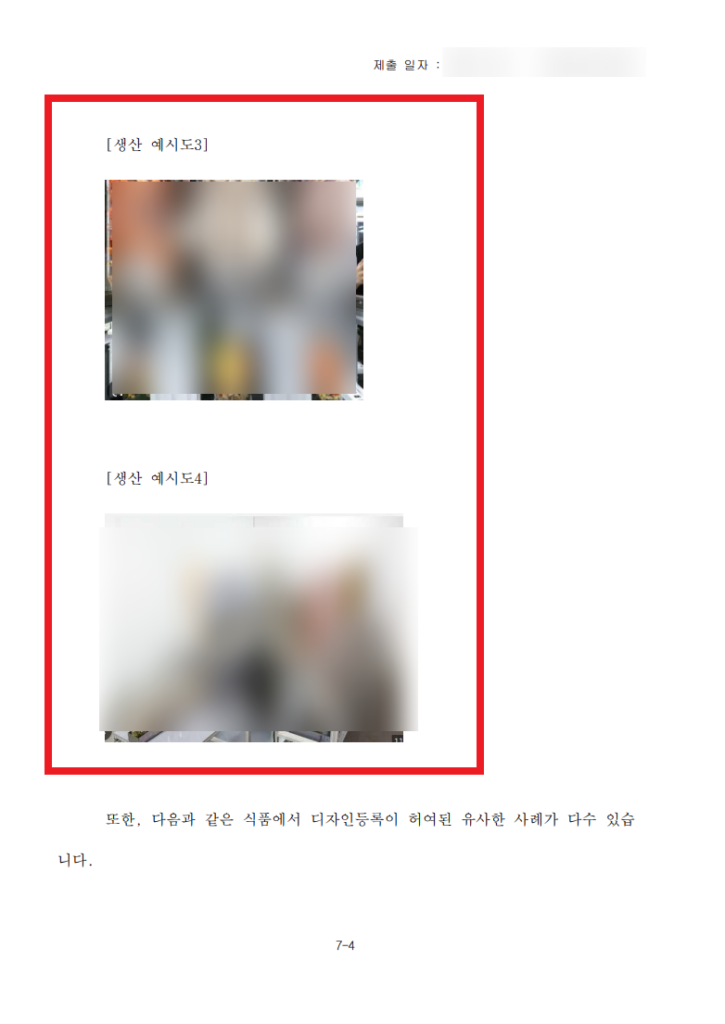
Applicant’s response filing with reference photos of the cup bibimbap product 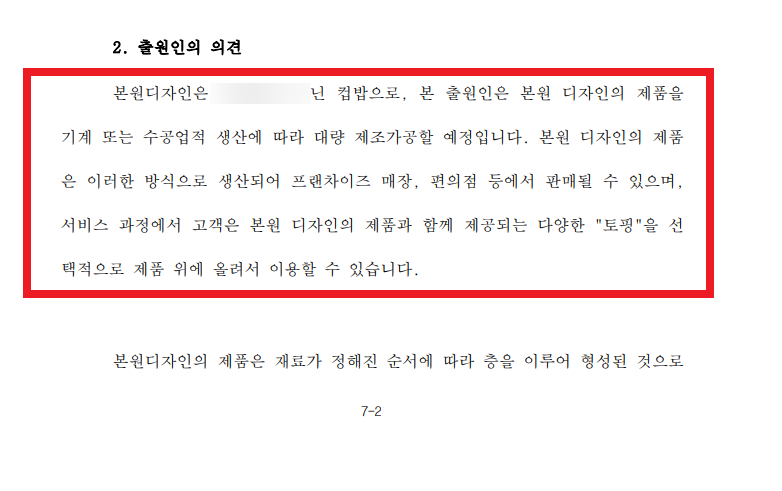
Applicant’s written opinion arguing the cup bibimbap design meets industrial applicability
The Verdict: Registration Granted
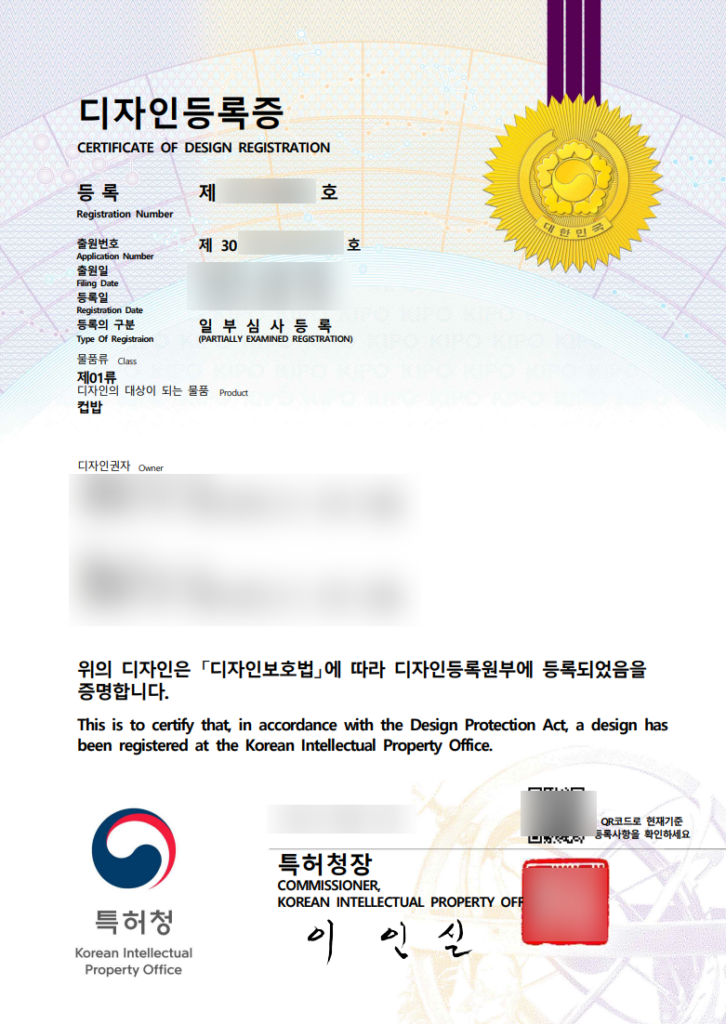
Our detailed argumentation persuaded the examiner. We successfully proved that even though natural ingredients vary slightly, the overall aesthetic structure could be industrially replicated.
MOIP withdrew the rejection and issued a Decision of Registration.
Conclusion
For food franchises, the visual presentation is often as important as the taste. Securing a design right for your signature dish can be a powerful tool against competitors.
Many applicants give up when they hear “food cannot be patented.” However, with the right strategy and evidence of standardization, it is possible to overcome the “Industrial Applicability” hurdle. At Sarang IP, we find the logic to turn “Impossible” into “Registered.”