The Nightmare Notification
For any e-commerce seller, there is one notification that induces instant panic: “Your product sales have been suspended due to an Intellectual Property Rights infringement report.”
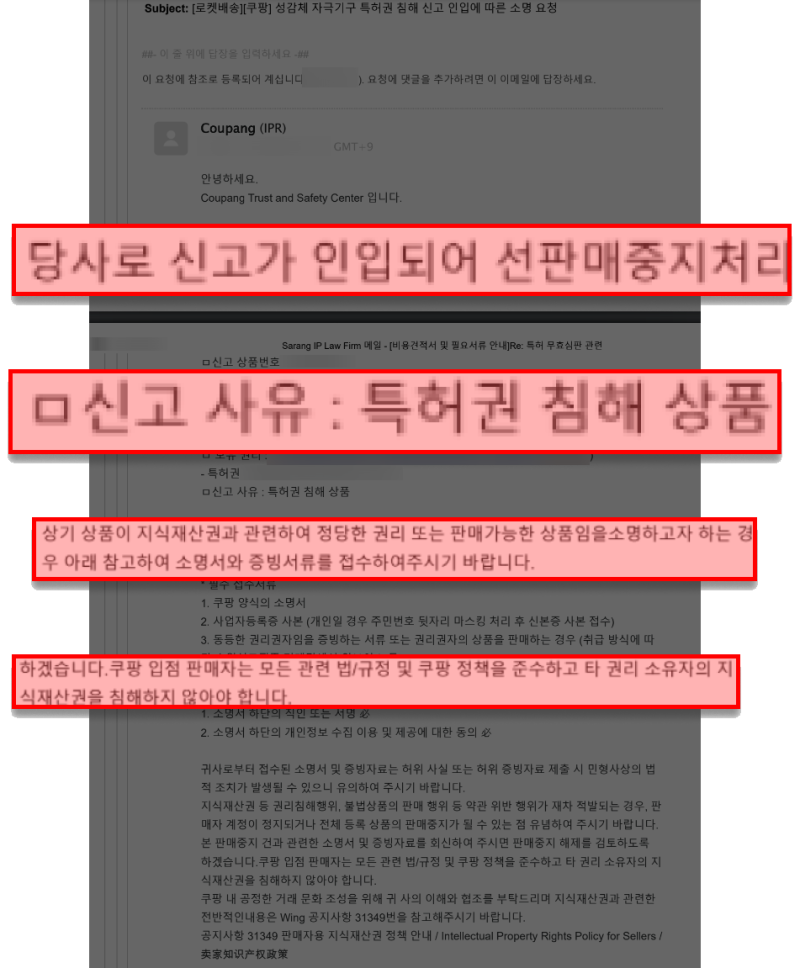
This is exactly what happened to Mr. Bae, the CEO of an import business specializing in mini home appliances. He had been successfully importing a popular product from China and selling it on Coupang, Korea’s largest e-commerce platform. Suddenly, his listing was taken down. A competitor claimed to hold a Korean patent for the exact device Mr. Bae was selling and demanded a halt to all sales.
For a platform seller, a suspended listing means immediate revenue loss and damage to store credibility. A rapid, decisive response was critical.
The Anomaly: A Patent That Shouldn’t Exist
When Mr. Bae approached Sarang IP, he was baffled. The product he was importing wasn’t new. In fact, it had been sold in the Chinese market for over four years.
Our initial review confirmed his suspicion. The competitor’s patent application date in Korea was nearly two years after the product had already appeared in the Chinese market. Under patent law, an invention must be “novel” to be registered. If a product is already publicly known or sold before the patent application is filed, that patent is invalid.
It appeared the competitor had taken an existing Chinese product and registered it as their own invention in Korea—a practice known as a “bad faith” filing to block importers like Mr. Bae.
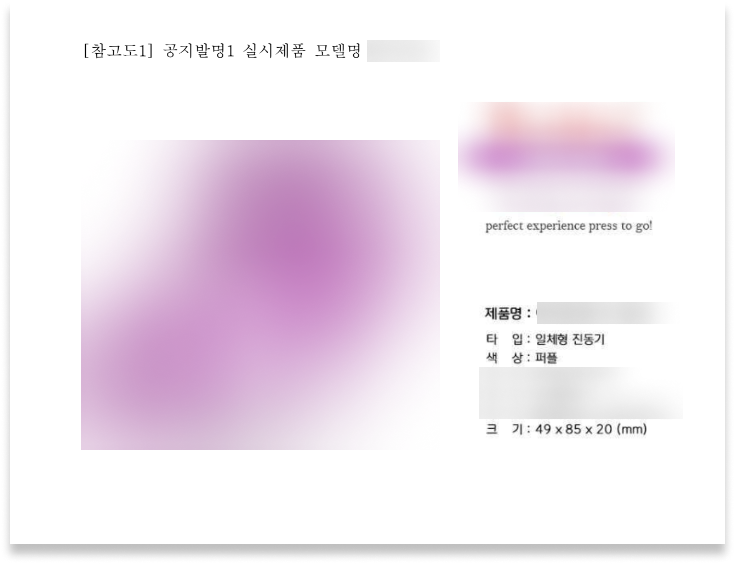
Prior-art reference document showing the known product’s drawing and dimensions 
Technical drawing from a prior-art publication depicting the same device as the disputed patent
The Investigation: Digital Forensics
At Sarang IP, we believe that a legal argument is only as strong as the evidence supporting it. We immediately launched a Precision Prior Art Search. We didn’t just look at patent databases; we scoured the digital footprint of the product.
The results were overwhelming. We uncovered undeniable proof that the technology was already in the public domain long before the competitor filed their patent:
- Social Media Evidence: We found product unboxing and review videos on Facebook (May 2020) and YouTube (September 2020) that clearly displayed the product’s internal specifications.
- Commercial Evidence: We secured import declaration records from 2020 and archived sales pages from online malls dating back to November 2020.
- Legal Evidence: Crucially, we found a Chinese Utility Model Gazette published in December 2020 by the original manufacturer, detailing the exact same technical configuration.
The competitor had effectively patented a product that already belonged to the public domain.
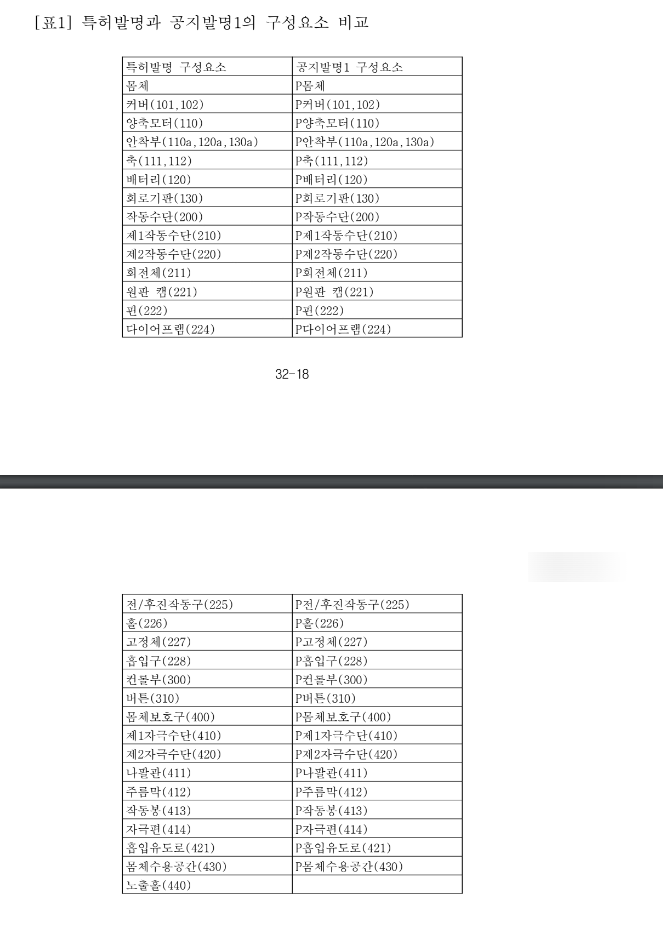
Comparison table matching the patented invention’s components against prior-art invention 1 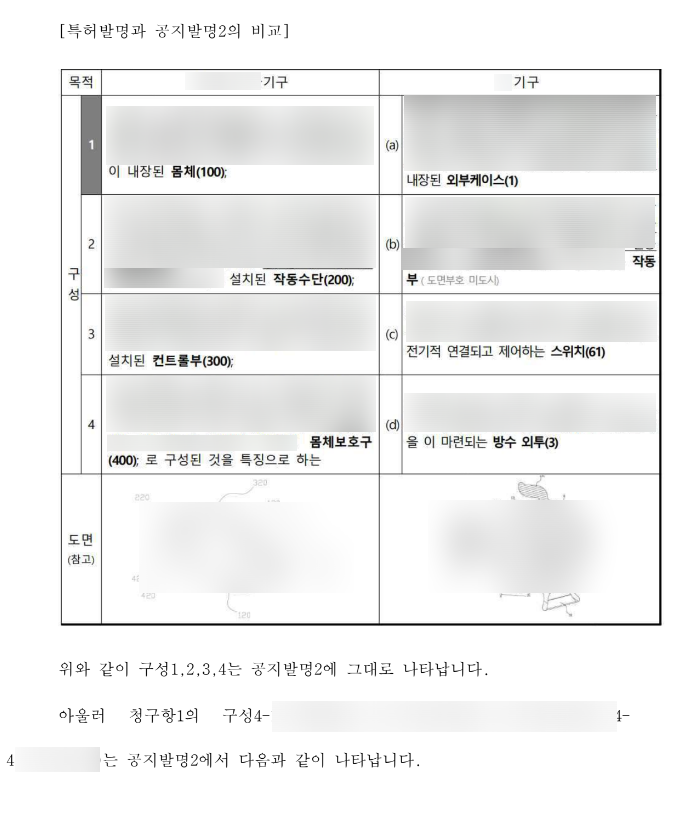
Element-by-element table comparing the patented invention with prior-art invention 2, including drawings
The Counterattack: Patent Invalidation Trial
While a simple attorney’s opinion letter might have been enough to argue non-infringement, Mr. Bae wanted a permanent solution. He wanted to ensure this competitor could never threaten his business—or anyone else’s—with this bogus patent again. He instructed us to file for a Patent Invalidation Trial.
Sarang IP aggressively represented Mr. Bae throughout the proceedings.
- Submission of Evidence: We presented the timeline of our findings, proving the lack of novelty and inventive step.
- Oral Hearings: We participated in oral hearings at the Korean Intellectual Property Trial and Appeal Board (KIPTAB), arguing that the patent was wrongfully registered.
- Persistence: Over the course of the trial, we submitted more than three rounds of detailed written arguments to rebut the patent holder’s claims.
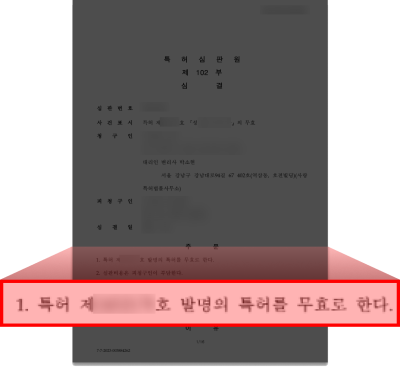
Korea IP Tribunal decision highlighting the ruling that invalidates the competitor’s patent 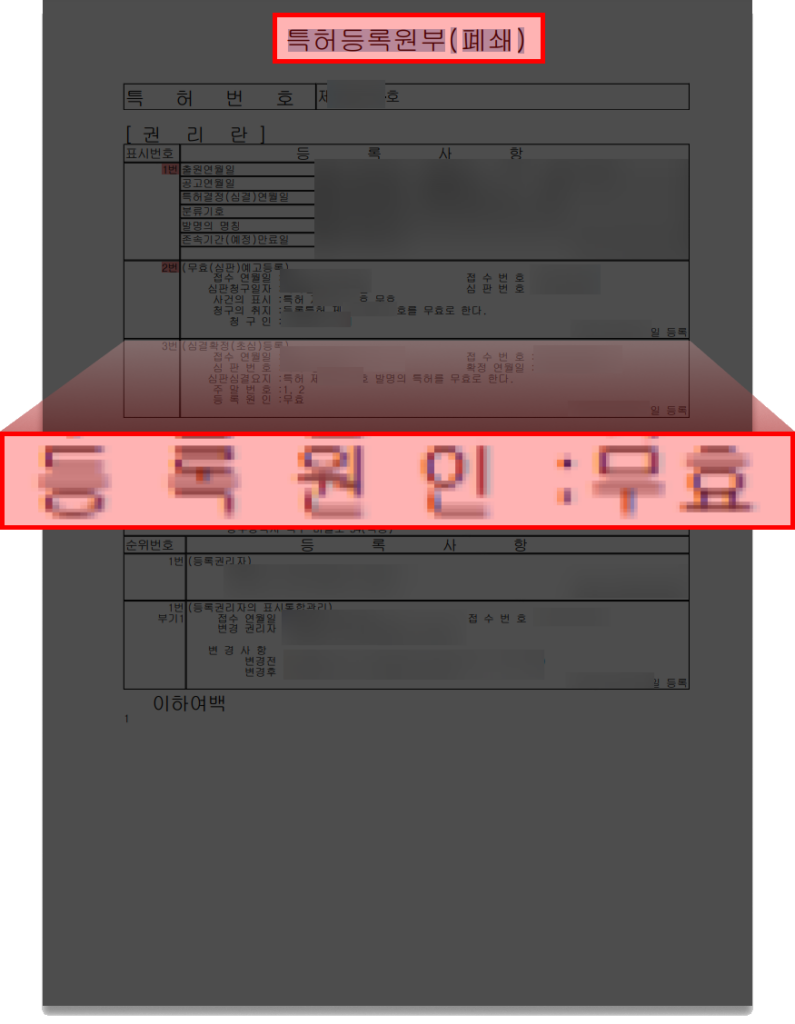
Closed Korean patent register showing the registration cause marked as invalidated
The Verdict: Invalidated
After a fierce legal battle lasting approximately nine months, the verdict was delivered. The tribunal ruled in our favor.
The competitor’s patent was declared “Invalid.”
The ruling confirmed that the technology lacked novelty because it was identical to products already available to the public prior to the filing date. With the patent retroactively extinguished, the infringement claim collapsed. Mr. Bae was cleared of all “false accusations” and was able to reinstate his sales on Coupang, securing his revenue stream once again.
Protecting Your E-commerce Business
In the fast-paced world of online retail, IP disputes are becoming a common weapon to eliminate competition. However, not all patent registrations are legitimate.
This case serves as a reminder: Just because a competitor holds a patent registration does not mean it is unassailable. If you are facing an unfair suspension on platforms like Coupang or Naver Smart Store, do not give up.