“If I register my design, will it protect me against copycats?”
Clients often ask this. Theoretically, a design registration protects not only the identical design but also “similar” designs.
However, a recent Korean Supreme Court ruling reminds us that the legal scope of “similarity” can be narrower than you think, especially for common products. Does this mean design registration is useless? Absolutely not.
Let’s analyze the case and understand why securing your right is still crucial.
The Case: Food Storage Containers
Design disputes rarely reach the Supreme Court in Korea, making this ruling particularly significant. The case involved the design of a cylindrical food storage container (a plastic jar for nuts or grains).
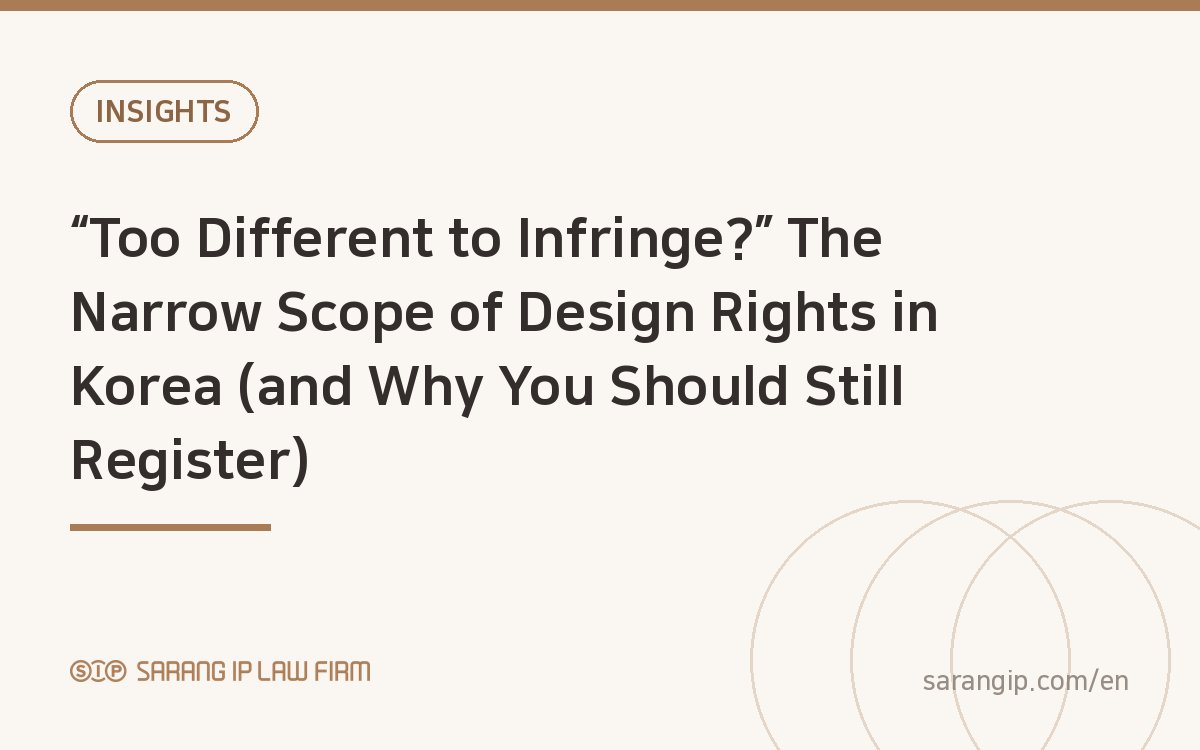
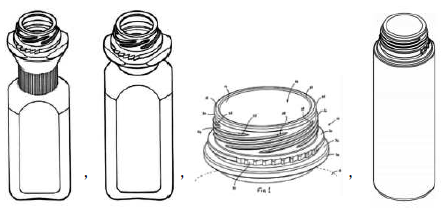
Registered Design (Plaintiff): A 3-tier cylindrical bottle with specific curves and a “toothed” locking mechanism on the neck.
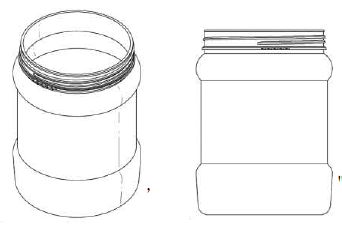
Accused Design (Defendant): A very similar-looking 3-tier bottle.
At first glance, they look quite similar. They share the same structure: a lid, a 3-part body (Top/Middle/Bottom), and a transparent material. However, the Supreme Court ruled that the designs were Dissimilar (Non-infringing) (Supreme Court of Korea, Jan. 23, 2025, Case No. 2024Hu11026).
Why Did the Court Rule “Not Similar”?
The court applied two key principles of Korean Design Law:
1. The “Prior Art” Filter
Features that are already common or exist in prior designs (public domain) are excluded from the similarity assessment.
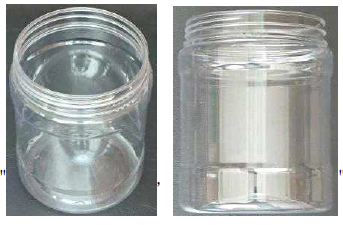
- Court’s View: The 3-tier body structure and the general cylindrical shape were already widely used in the industry. Therefore, these similarities do not count towards infringement.
2. The “Crowded Art” Principle
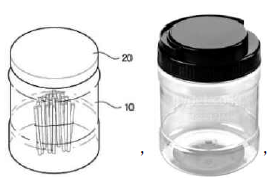
For products that have been used for a long time with many existing variations (like bottles, cups, or chairs), the scope of similarity is interpreted narrowly. Small differences become significant.
The Deciding Differences
Once the common features were stripped away, the court focused on the specific details:
| Feature | Registered Design | Accused Design |
| Neck Teeth | 5 Triangular protrusions | 4 Trapezoidal protrusions |
| Body Shape | Curved top; Tapered bottom | Vertical (Straight) top and bottom |
| Bottom | Flat | Convex (bulging center) |
Conclusion: Although they share a general impression, the specific differences in the teeth shape, body curvature, and bottom structure create a different aesthetic impression. Thus, No Infringement.
The Dilemma: Is Registration Worth It?
If the scope is so narrow that a competitor can avoid infringement by changing the shape of the “teeth” or the “curve,” why bother registering?
As a patent attorney with 18 years of experience, I still strongly advise: “Having a registration is infinitely better than having nothing.”
Here is why:
1. The Power to Enforce (Cease & Desist)
Without a registration, you have no legal standing to even send a warning letter. A registration certificate is the minimum requirement to claim ownership and pressure copycats. Even if the scope is narrow, many infringers stop at the initial warning stage.
2. Prevention of “Identical” Copies
While “similar” designs might be debatable, a registration creates a solid wall against identical knockoffs. Without it, anyone can legally make an exact replica of your product.
3. Asset Value
A registered design is an Intellectual Property asset that adds valuation to your company.
4. The “1-Year” Trap
Remember, if you disclose your design (e.g., launch the product) and do not file within 1 year (Grace Period), your own design becomes “Prior Art.” This means you lose the right forever, and anyone can copy it freely.
Conclusion: Protect Your Hard Work
Design law is strict. We humans rely 70% on vision, making us very good at spotting small differences. This naturally leads courts to narrow interpretations of similarity.
However, business is not just about court rulings. It is about claiming your territory. Do not leave your design in the public domain for anyone to take. Register it, define your rights, and protect your market.
It is always better to have a shield, even a small one, than to stand on the battlefield with nothing.
Sarang IP We provide expert legal counsel on Korean Design Law, similarity analysis, and IP strategy.
(Disclaimer: This post is for informational purposes only and does not constitute specific legal advice. Please consult with a professional attorney regarding your specific case.)