(Patent Court Judgment 2022Na2305, 2312: Design Infringement Damages)
Yesterday, we held the second session of the “IP Practice Forum” in collaboration with Law Firm Yuram. Even after 18 years as a patent attorney, I find there is always something new to learn.
In this session, we discussed defense strategies in patent and design infringement lawsuits. I presented a specific case regarding a “Sausage Rice Cake” (Kkochi-tteok) design dispute.
As patent attorneys, we are experts in determining “similarity” and “scope of rights.” However, the actual calculation of damages in a courtroom is often the domain of litigators. This forum was a valuable opportunity to dive deep into how courts determine the price tag on infringement.
Today, I want to share the details of this case. It answers a common question: “Can food be registered as a design? And if infringed, how much money can I actually get?”
The Case: The “Sausage Rice Cake” Dispute
This case involved a popular snack found at Korean highway rest areas: a sausage wrapped in rice cake served on a skewer.
- Plaintiff: The design right holder and distributor.
- Defendants: Two manufacturers (one was a former partner who breached contract) and one online seller.
- The Claim: The Plaintiff sued for design infringement and damages, claiming the Defendants sold copycat products.
Issue 1: Is it Infringement? (Yes)
The Defendants argued that their product was merely a variation of existing “prior art” (publicly known designs) and thus constituted “free use.”
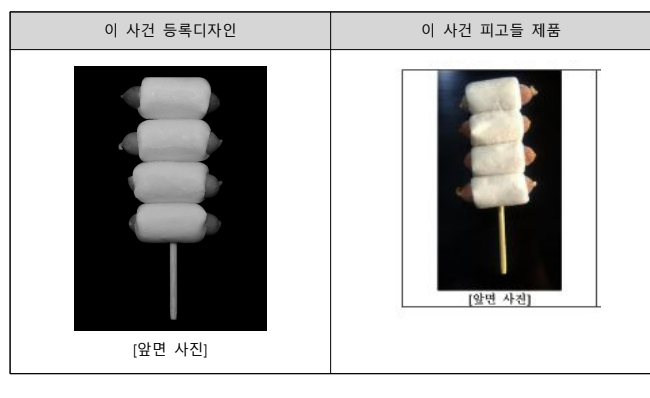
However, the Patent Court rejected this argument and ruled in favor of the Plaintiff (Patent Court of Korea, Aug. 29, 2024, Case Nos. 2022Na2305 and 2022Na2312).Why the Court Found Infringement: The court compared the accused product with prior designs (Designs 2 & 4) and found distinct differences:
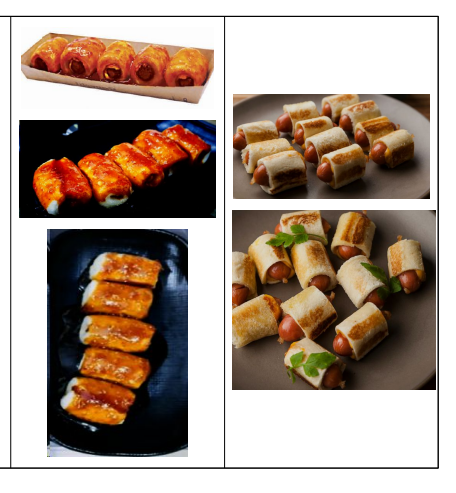
- Exposed Ends: The accused product had sausage ends protruding from the rice cake, whereas prior designs had the sausage fully or mostly covered.
- Material: The accused product used rice cake (tteok), while a key prior art used bread. The court noted that the texture and cooking method of rice cake create a distinct aesthetic difference from bread.
- Configuration: The accused product featured four wrapped sausages on a skewer, whereas prior designs were simply plated.
Key Takeaway: Even in food, specific combinations of shape, material (texture), and arrangement can be recognized as a unique, protectable design.
Issue 2: The Million-Dollar Question… Damages
This is the part business owners care about most. How much did the court award?
The Plaintiff presented a very specific calculation based on “Marginal Profit.”
- Plaintiff’s Calculation:
- Marginal profit per unit: 209.2 KRW (Sales price minus variable costs).
- Total units sold by Defendants: Approx. 1.15 million units.
- Total Claim: ~143 Million KRW (Calculated based on the Plaintiff’s 50% share ownership during part of the period).
- They also requested punitive damages (3x), claiming malicious intent.
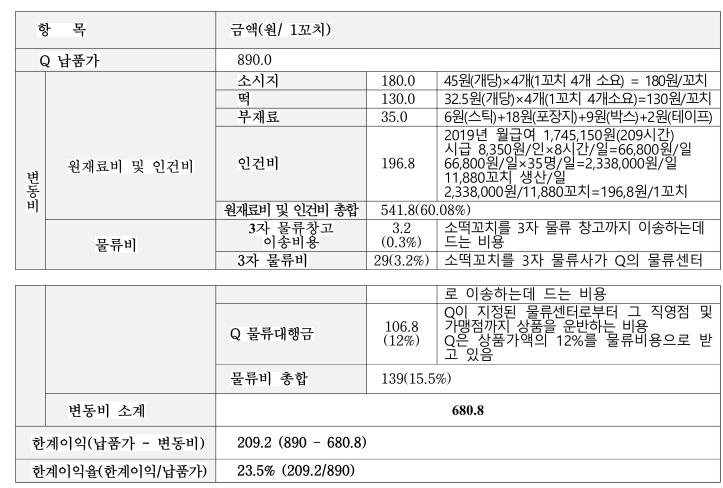
Korean court table calculating material and labor costs and profit margin for the damages assessment 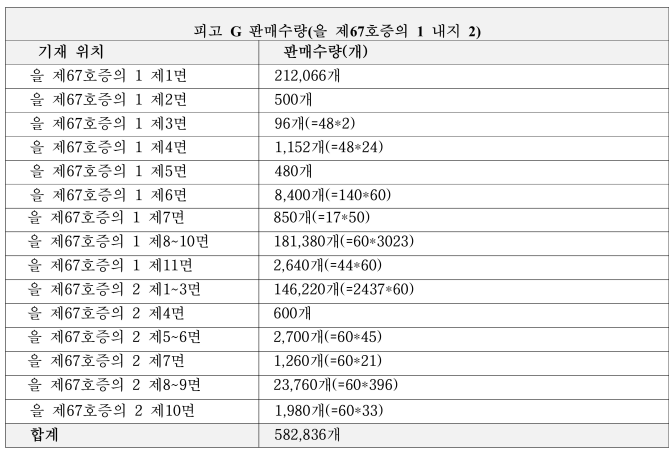
Defendant G sales-quantity table totaling 582,836 units, used to calculate infringement damages 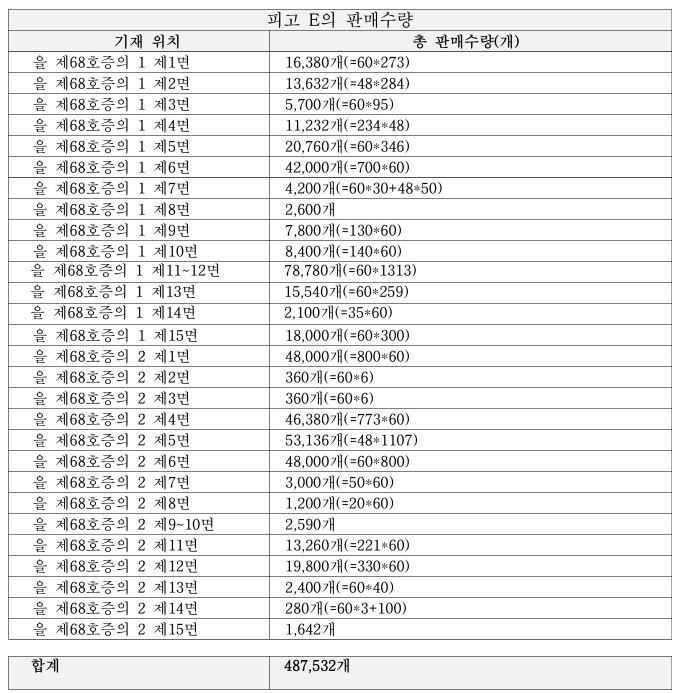
Defendant E sales-quantity table totaling 487,532 units, used to calculate infringement damages
The Court’s Decision: 40 Million KRW
The court did not accept the Plaintiff’s detailed calculation. Why? The court stated that proving the exact “profit per unit” lost by the Plaintiff was legally difficult with the evidence provided.
Instead, the court applied Article 115(6) of the Design Protection Act:
“If it is extremely difficult to prove the facts necessary to prove the amount of damage… the court may determine a reasonable amount of damage based on the entire intent of the arguments and the result of the examination of evidence.”
Final Award:
- Total Damages: 40,000,000 KRW (approx. $30,000 USD)
- Manufacturers (Jointly): 35 Million KRW
- Seller: 5 Million KRW
- Punitive Damages: Denied (Malicious intent not proven).
Strategic Insight: Is Registration Worth It?
You might think, “They sold over 1 million units, but the damages were only 40 million KRW? Is it worth the legal fees?”
The Answer is YES.
- The Injunction Power: The primary value here is not just the cash award, but the Order to Cease and Desist. The Plaintiff successfully stopped a competitor (a former partner) from flooding the market with copycats. The market share protection is worth far more than the damage award.
- Food Design is valid: Many people do not know that food can be registered as a design. We have successfully registered designs for “Cup-bap” (Cup rice), styled breads, and even Jelly Cakes.
- Leverage: Without the registration, the Plaintiff would have had no legal standing to stop the breach of contract and copycat sales effectively.
Conclusion: In this case, the damages were conservative because the court opted for a discretionary lump sum rather than the specific marginal profit calculation. However, the victory secured the Plaintiff’s market position.
Rights are always better than no rights. A registered design is the only weapon that works when a partner turns into a competitor.
Sarang IP We provide expert legal counsel on Food Design Patent, IP litigation, and damage estimation strategies.
(Disclaimer: This post is for informational purposes only and does not constitute specific legal advice. Please consult with a professional attorney regarding your specific case.)