If you advise clients entering the Korean market, one question comes up before almost any filing: what is already on the register in Korea? The good news is that you do not need a local subscription database to find out. Korea’s official search platform, KIPRIS, is free, comprehensive, and available in English – yet many foreign practitioners either do not know it exists or use only a fraction of what it offers.
This guide explains what KIPRIS covers, how to run a meaningful search in English, and where its limits are – the point at which a machine-translated result list stops being enough and local judgment starts to matter.
What Is KIPRIS, and Who Runs It?
KIPRIS (Korea Intellectual Property Rights Information Service) is the official search service for Korean IP rights, operated under the Ministry of Intellectual Property (MOIP) – the Korean IP office, elevated to ministry status in October 2025 and long known abroad as KIPO – together with the Korea Institute of Patent Information (KIPI). It is available at kipris.or.kr.
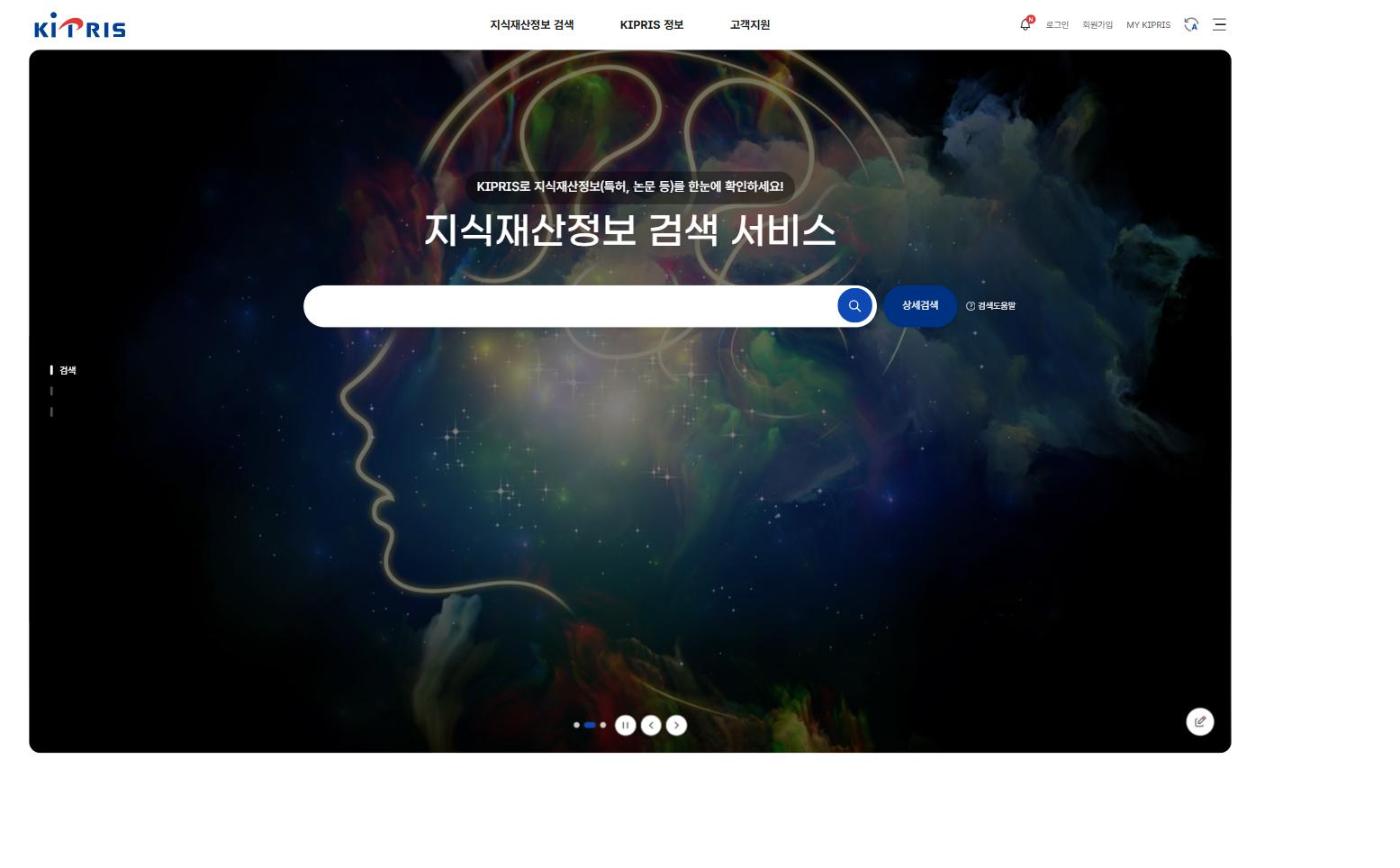
Coverage is broad: patents, utility models, designs and trademarks, from application through examination, registration, and post-grant proceedings. Unlike many free databases that show only bibliographic snapshots, KIPRIS exposes the administrative record – examination status, office actions issued, registration details, and trial (inter partes) history before the Intellectual Property Trial and Appeal Board.
What Can You Actually Search in English?
For most foreign users, three search types do the real work.
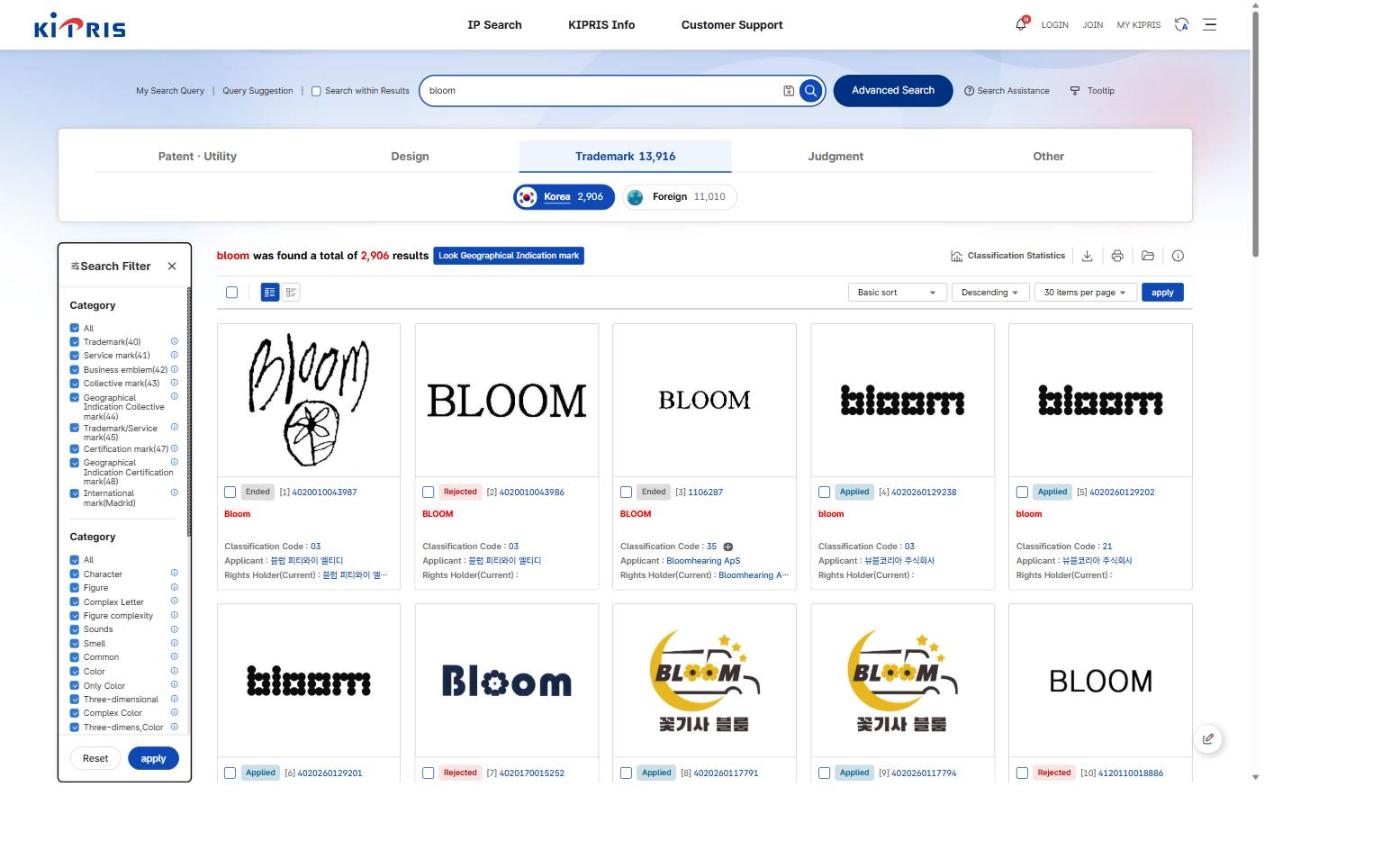
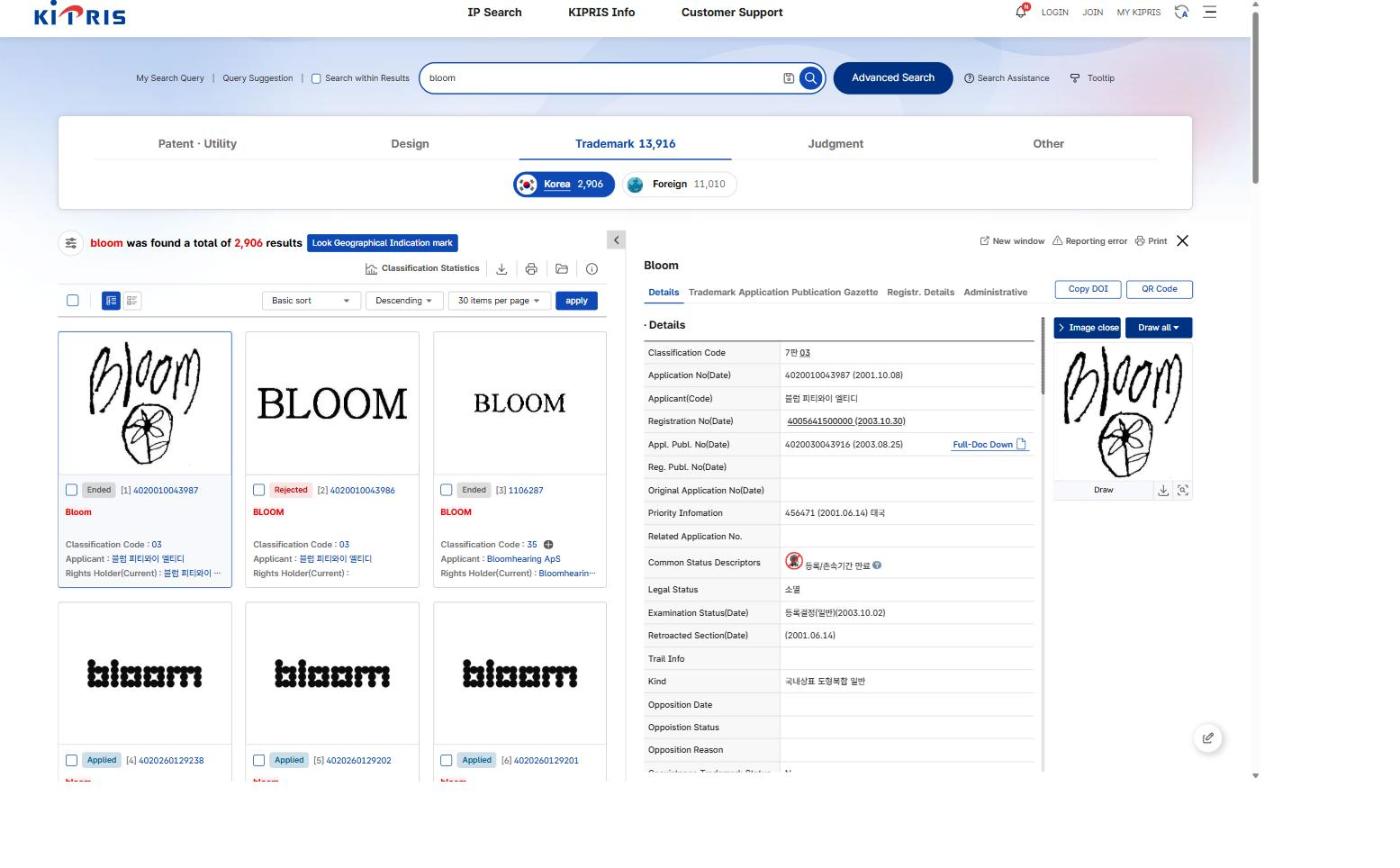
1. Trademark searches. You can search word marks by text, browse by Nice classification, and filter by applicant or registration number. Korean-language marks are the tricky part: a clearance search that checks only the Roman-alphabet spelling of your client’s brand will miss Hangul transliterations – and in Korea, it is often the Hangul version that a squatter files first. A meaningful clearance search should cover the English mark, its standard Hangul transliteration(s), and phonetically similar variants.
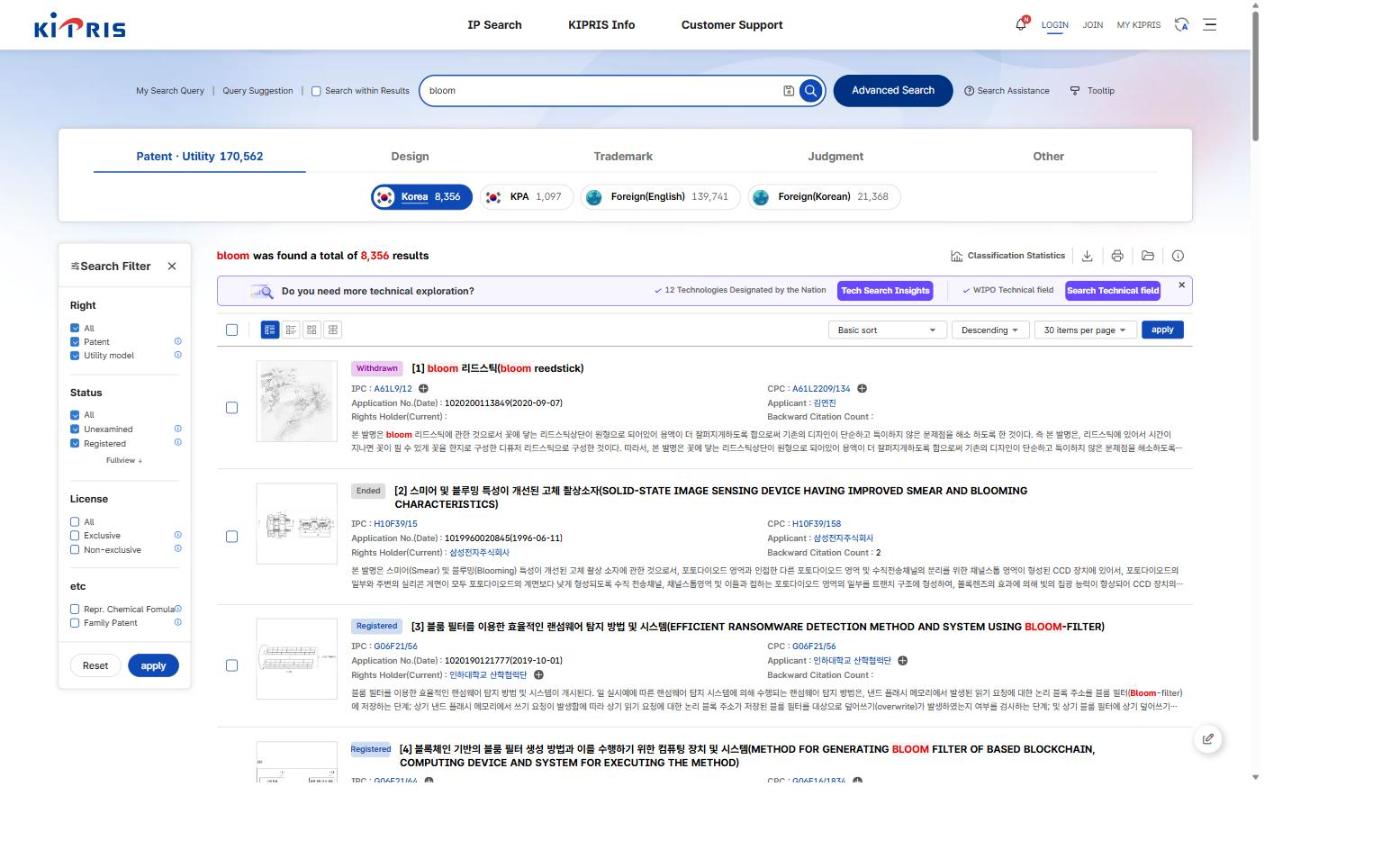
2. Patent and utility model searches. KIPRIS provides English bibliographic data and machine-translated full texts of Korean patents. For a freedom-to-operate snapshot or a quick check on a competitor’s Korean filings, this is usually sufficient to identify the documents that matter. It is not sufficient to construe claims – machine translation of claim language is where we see foreign counsel most often misread the scope of a Korean right.
3. Legal-status and trial searches. This is the feature we recommend most to overseas associates. Before sending a demand letter or filing an opposition, check the target right’s current status: Is it registered or still pending? Has a non-use cancellation or invalidation trial already been filed? Is the registration within a renewal window? The answers frequently change the strategy – as our earlier case study on defending a non-use cancellation in Korea illustrates.
Three Practical Tips Before You Rely on the Results
① Check the unpublished window. Korean trademark applications appear on KIPRIS shortly after filing, but there is still a lag of days to weeks. A clean search today does not guarantee a clean register tomorrow – Korea is a first-to-file jurisdiction, and speed matters more than in use-based systems.
② Read status codes with care. “Application withdrawn,” “rejected,” and “invalidated” have distinct legal consequences for what you can safely file next. A rejected application may still be under appeal; treat every adverse status as provisional until you confirm the record is final.
③ Do not stop at the register. KIPRIS tells you what is filed, not how a Korean examiner or court will assess similarity. Korean practice on mark similarity – sound, appearance and meaning weighed against Korean-consumer perception – regularly produces outcomes that surprise foreign counsel. If a search result sits in the grey zone, that is precisely when a local opinion earns its fee. The same is true on the contentious side: standing rules in Korea are unusually open, as we explained in our column on trademark oppositions, so a mark you find on the register can be challenged by almost anyone – including your client.
Where KIPRIS Fits in Your Workflow
To be clear about how we use it ourselves: for full clearance work our firm runs professional-grade commercial databases such as WIPS and MarkSearch, which offer deeper similarity algorithms and analytics. But for first-pass, basic checks, KIPRIS is an excellent starting point – and it costs nothing.
KIPRIS is one of the most generous official IP databases anywhere: free, in English, and deep enough to support real pre-filing and pre-dispute analysis. Use it early and often. And when a result needs interpretation rather than retrieval – similarity in the Korean context, claim scope, or the strategy behind a trial record – that is the moment to bring in Korean counsel.
Sarang IP Law Firm works with overseas law firms and in-house teams on Korean trademark, design and patent matters, from clearance through contentious proceedings. If a KIPRIS result has raised more questions than it answered, we are happy to take a look.
This content is for general informational purposes only and does not constitute legal advice. For specific matters, please contact Sarang IP Law Firm.